
The US standard keyboard comes with:

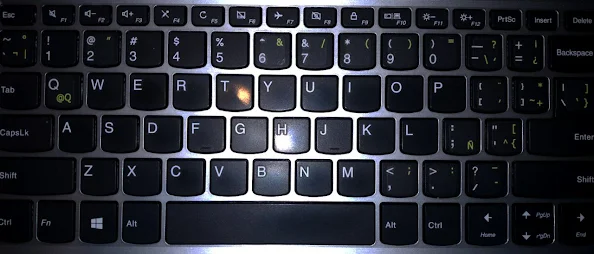
If you have a laptop with a US keyboard converted to Latin American Spanish (Latin America), you may have noticed that while in X11 / Wayland you can type < > using AltGr (the right Alt key) + Shift + X or Z (with latam keyboard 104 keys), you can't in a tty console and must use "loadkeys us" alternating with "loadkeys la-latin1".
You can map these symbols by modifying the la-latin1 keyboard layout, which is the correct layout for this keyboard in the console, by modifying the following lines.
HOW TO:
in /usr/share/kbd/keymaps/i386/qwerty/ you will find la-latin1.map.gz.
Create the file /usr/local/share/kbd/keymaps using mkdir -p and copy la-latin1.map.gz there. Then, run gunzip la-latin1.map.gz and edit the la-latin1.map file with Vim.
On the line containing "keycode 86 = less greater" (line 61, which isn't working), delete entire line and add the next in the same place and below:
altgr keycode 51 = less
altgr keycode 52 = greater
Save and exit.
Rename the file to personal.map using the mv command, then convert it to a .gz file using gzip personal.map, which compresses it and renames it to personal.map.gz.
Now copy it to /usr/share/kbd/keymaps/i386/qwerty/.
Use localectl to set it like this:
localectl set-keymap personal personal
Now you have the right Alt key (AltGr) to use the original location of the <> symbol in the keyboard position (< above the comma, and > above the period) in the tty console without having to use loadkeys us.
Add keyboard latam to X11 / Wayland DE because now, the DE It won't recognize the map and will use the one on the keyboard, which is in English ANSI, so add latam/es if you haven't already.
And now you have latam with < > in X11 / Wayland and latam with < > in tty using the original keys.

No hay comentarios.:
Publicar un comentario
Dejá tu comentario